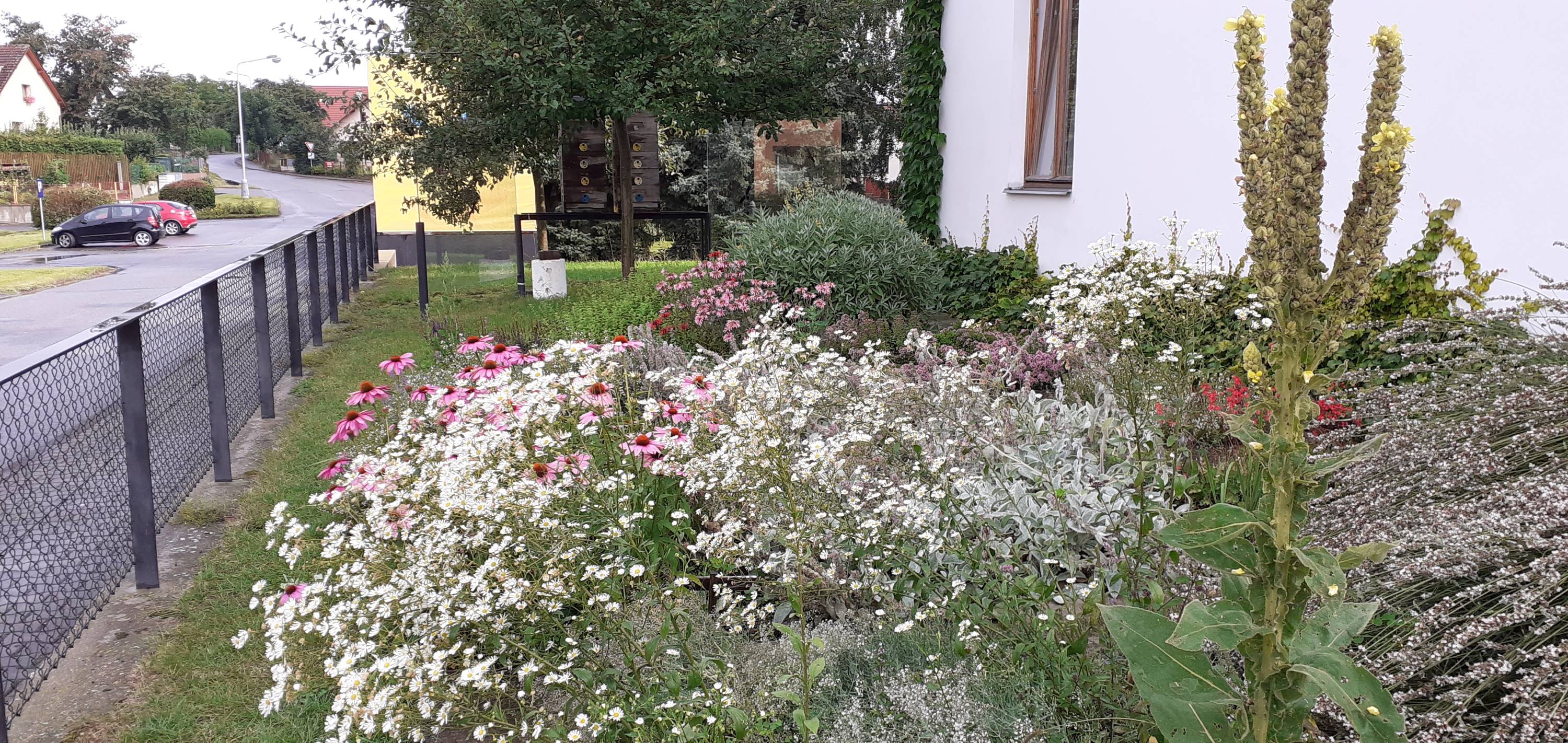
Pollinator garden – a feast for the eyes and the bees
Our garden is not just beautiful to look at – above all, it is full of life. From spring to autumn, plants gradually come into bloom, providing bees, bumblebees and other pollinators with an important source of nectar and pollen.
You will find a fragrant herb garden, a colourful bed of fodder plants, as well as perennials and shrubs that attract insects from the surrounding area. Fruit trees are also present – apple trees and a pear tree of old-standard varieties, which are literally covered in flowers in spring and are among pollinators’ favourite stops.
The garden is designed so that something is always in bloom. This continuous flowering throughout the season is crucial for pollinators – it ensures they have enough food from the first days of spring until autumn.
For better orientation, some plants are labelled, while elsewhere we let you discover them for yourself. You may be surprised by how many species bees visit during a single visit – and by how diverse a world of pollinators is hidden even in an ordinary flower.
Herb garden
Fragrant herbs that you know from the kitchen and garden. Many of them are a valuable source of nectar and pollen for bees. Thanks to the labels, you can easily identify the individual plants and find inspiration.
Nectar-rich bed of fodder plants
A colourful mixture of plants commonly grown as animal feed, but which are also important sources of food for pollinators. You will find an overview of them and interesting facts on the information panel.
Perennials and shrubs for pollinators
A bed full of flowering perennials and shrubs that attracts bees, bumblebees and butterflies. The plants are not yet labelled, but that is precisely why there is room for discovery – and also a frequent source of inspiration for beekeepers and gardeners.
Photo gallery